

Illness Anxiety Disorder: Why Does Your Mind Fear Disease When Your Body Is Healthy? | Safe and Sound
Illness anxiety is a condition in which a person constantly fears they have or will develop a serious illness, even though their body shows no obvious symptoms or has been examined and found to be normal. This anxiety does not stop after reassurance, but can return very quickly when the patient notices an unusual sensation in their body.
What makes illness anxiety so exhausting is that patients often get caught in a cycle: feeling unwell – fearing illness – seeking information – checking their body – feeling temporarily reassured – then worrying again. This article will help you understand what illness anxiety is, how it differs from normal health concerns, its signs, and when to seek professional help.
What is illness anxiety?
Taking care of your health is essential. When your body shows unusual signs, monitoring, resting, or seeing a doctor is a reasonable response. Usually, after a clear explanation from a doctor or a normal test result, most people feel more at ease.
With illness anxiety, this feeling of reassurance is often short-lived. Patients continue to worry that they may have a serious illness, an undiagnosed disease, or inaccurate examination results. Even minor sensations like a rapid heartbeat, bloating, a fleeting headache, fatigue, or sweating can be interpreted as dangerous signs.
The core of illness anxiety isn't about "imagining illness" or "overreacting." Their fears are real, their stress is real, but the way their minds interpret their bodies' signals is becoming exaggerated. This makes it difficult for them to escape feelings of unease, even without clear evidence of a serious illness.
Distinguish between illness anxiety and general health concern.
Not everyone who pays attention to their health suffers from anxiety and illness. Someone who proactively gets regular checkups, monitors for unusual symptoms, and seeks medical attention when needed is taking reasonable care of themselves. The difference lies in the level of anxiety, the ability to accept medical information, and the extent to which it impacts daily life.
|
Criteria |
General health care |
Illness anxiety |
|
When the body shows unusual signs |
Monitor your condition, rest, or see a doctor if needed. |
It's easy to immediately think of a serious illness. |
|
After the normal results |
Usually feel more at ease. |
Still have doubts, afraid the doctor might have missed something or the tests weren't thorough enough. |
|
Frequency of body check-ups |
Check only when absolutely necessary. |
Repeated checks make it difficult to stop. |
|
Search for medical information |
For reference only. |
I kept searching for information, and the more I read, the more worried I became. |
|
Impact on life |
Minimal impact on daily life |
It can reduce concentration, cause fatigue, and affect work and relationships. |
|
A sense of control |
We can put our worries aside now that we have clear information. |
The anxiety returned quickly, despite reassurances. |
It's important to note that anxiety about illness doesn't necessarily drive people to seek medical attention all the time. Some people go for checkups regularly to find certainty, while others avoid them altogether for fear of discovering a disease. Either way, health concerns are influencing their emotions and behavior.

Why are some people more prone to illness-related anxiety?
The exact causes of illness anxiety are still not fully understood. However, experts believe that several factors may increase the risk of developing or maintaining this condition, including:
- Having suffered from a serious illness or witnessed a loved one become ill: Past experiences related to illness can make some people more sensitive to health signs and more prone to anxiety when their bodies show changes.
- Influence from the family environment: If a person grows up in an environment where illness is constantly emphasized or parents are frequently worried about their health, they may develop a tendency to be overly concerned about bodily signs.
- History of prolonged anxiety or stress: People who are already prone to anxiety or are experiencing prolonged stress in their lives may be more likely to focus on health-related risks.
- Frequently searching for medical information on the internet: Constantly reading content about symptoms and diseases can increase health anxiety, especially when readers easily relate that information to themselves.
Common signs of illness anxiety
This anxiety can persist even when the patient has no obvious symptoms or has been examined with normal results. Therefore, signs of illness anxiety are not only in thoughts, but also manifested in how the patient checks their body, seeks information, and reacts to medical results.

I'm always afraid I have or will have a serious illness.
People suffering from illness anxiety often spend a lot of time thinking about the possibility of having a serious illness. What exhausts them is that the worry is often disproportionate to the actual situation. A normal bodily change can quickly be interpreted as a sign of a dangerous disease.
Some common symptoms include:
- I kept thinking, "Maybe I have a serious illness."
- It's easy to mistake mild symptoms for serious illnesses.
- It's hard to believe that bodily sensations can simply be normal reactions.
- Feeling insecure even after others have reassured you.
- Frequently imagines worst-case health scenarios.
The issue here isn't that the patient is "intentionally thinking negatively," but rather that their mind is tending to prioritize the most dangerous possibility. The more they try to be sure they're not sick, the deeper they become consumed by anxiety.
Frequent body checks or excessive health monitoring.
The check-up might provide a temporary sense of reassurance, but this feeling is usually short-lived. Afterward, patients begin to doubt themselves: “Was the check-up correct?”, “Did I miss any signs?”, “What if new symptoms appear?”.
Common behaviors include:
- Measure your heart rate, blood pressure, or temperature several times a day.
- Regularly look in the mirror and check your skin, lymph nodes, any unusual bumps, or any painful areas.
- Over-focusing on sensations like heartbeat, breathing, pain, or digestion.
- Ask family members repeatedly if the symptoms are unusual.
- It's hard to stop checking even though I know it makes me more anxious.
This cycle causes patients to become increasingly sensitive to their bodies the more they check. A small sensation that might have been overlooked before now becomes evidence, further increasing their anxiety.
Spend a lot of time searching for information about the disease.
The problem is that the same symptom can appear in many different situations, ranging from benign to serious. When anxious, patients tend to focus more on potential dangers, causing the search for information to become a factor that fuels their fear instead of helping them calm down.
Some common symptoms include:
- Look for symptoms several times a day.
- Read articles, forums, or stories about serious illnesses and relate them to your own situation.
- Compare each bodily sensation to the pathological description.
- The more I read, the more I feel like I "seem to have those symptoms."
- It's hard to stop searching, even though I know I'm getting more worried.
Searching for health information is a very natural need when we care about our health. However, searching doesn't always bring the peace of mind we expect. When searching becomes a repetitive habit to check safety, it can inadvertently increase anxiety.
It's difficult to feel confident about the examination results.
For most people, a normal test result usually brings a sense of relief. However, for those suffering from illness anxiety, this reassurance may only last a short time. They may then doubt the results, worrying that the illness was not detected or that further testing is needed.
Some signs to watch out for include:
- I'm still worried even though the examination results didn't reveal any abnormalities.
- I want to get a second opinion at a different place to be sure.
- I suspect the doctor didn't check thoroughly enough.
- The feeling of relief after the examination lasted only a very short time.
- Continue searching for information about the medical condition after you have been reassured.
This shows that the problem isn't just a lack of medical information. Patients are struggling to accept the absolute uncertainty about their health, so even with reassurance, their minds continue to search for more evidence.
Constantly going to the doctor or avoiding going to the doctor.
Whether it's excessive doctor visits or complete avoidance, both indicate that the fear of illness is dominating patients' decision-making. They are no longer approaching healthcare in a balanced way, but are instead driven by a need for reassurance or a fear of facing the outcome.
Common symptoms include:
- I went to many different doctors even though I had received normal test results.
- I'm doing more tests because I'm still not reassured.
- Regularly seek advice from multiple doctors or other sources.
- They delayed going to the doctor despite being very worried because they were afraid of hearing bad news.
- Avoiding reading test results, scheduling appointments, or talking about health.
Seeking medical attention when experiencing unusual symptoms is necessary, but if seeking medical help or avoiding it stems from excessive fear, patients should examine the cycle of anxiety behind that behavior.
It's difficult to focus on the present moment because of health concerns.
Over time, anxiety not only causes mental fatigue but also reduces quality of life. Patients may miss out on normal activities, lose connection with loved ones, or feel their lives are narrowed down to the question: "Am I sick?"
Some signs that anxiety has affected one's life include:
- It's difficult to concentrate because I'm constantly thinking about my illness.
- Reduced work or study efficiency.
- Avoiding social activities for fear of health problems.
- They often need someone else to reassure them.
- Feeling tired and stressed from constantly monitoring my body.
When anxiety about illness begins to consume too much of their time, energy, and attention, patients shouldn't just keep searching for more medical information. What's more important may be understanding how anxiety operates and finding the right support to break free from the check-doubt-reassure-worry cycle.
>> See also: 8 early warning signs of mental disorders in the elderly
How does anxiety about illness affect life?
Illness anxiety can exhaust patients even when they are not seriously ill. When the mind is constantly preoccupied with the risk of illness, patients find it difficult to relax, concentrate, and feel safe in their daily lives.
Some common side effects include:
- Mental health impact: Patients may frequently experience stress, fear, anxiety, or fatigue due to the constant monitoring of their bodies. The more they want to be sure they are not sick, the harder it is for them to feel at ease.
- Impact on work and studies: Reduced concentration, decreased performance, and difficulty completing tasks. Some people spend a significant amount of time each day reading medical information or checking symptoms.
- Impact on relationships: Patients may frequently seek reassurance from family and friends. Initially, this sharing may provide some relief, but if repeated too often, relationships can become strained.
- Increased healthcare costs and pressure: Frequent doctor visits, numerous tests, or constant seeking of certainty can add to the financial and time burden.
- Reduced quality of life: When worries about illness occupy too much of the mind, patients find it difficult to enjoy normal things like rest, eat, meet friends, or take care of themselves in a balanced way.
Patients should seek professional support when health anxieties are persistent, difficult to manage, and affect behavior such as self-examination, researching illnesses, or repeated doctor visits. Psychological support helps in understanding the anxiety cycle and how to respond more balancedly to body signals. This can gradually reduce the need for constant reassurance.
Conclude
Illness anxiety is not simply about being concerned about one's health or occasionally worrying when the body shows unusual symptoms. It's a condition where the fear of illness can become persistent, causing a person to constantly think about sickness, making it difficult to feel at ease even after medical checkups, and affecting many aspects of their life.
It's important to recognize that these anxieties are a real experience for those who are going through them. A proper understanding of illness anxiety can help individuals view their situation more objectively, while avoiding the vicious cycle of checking, searching for information, or prolonged worry about their health.
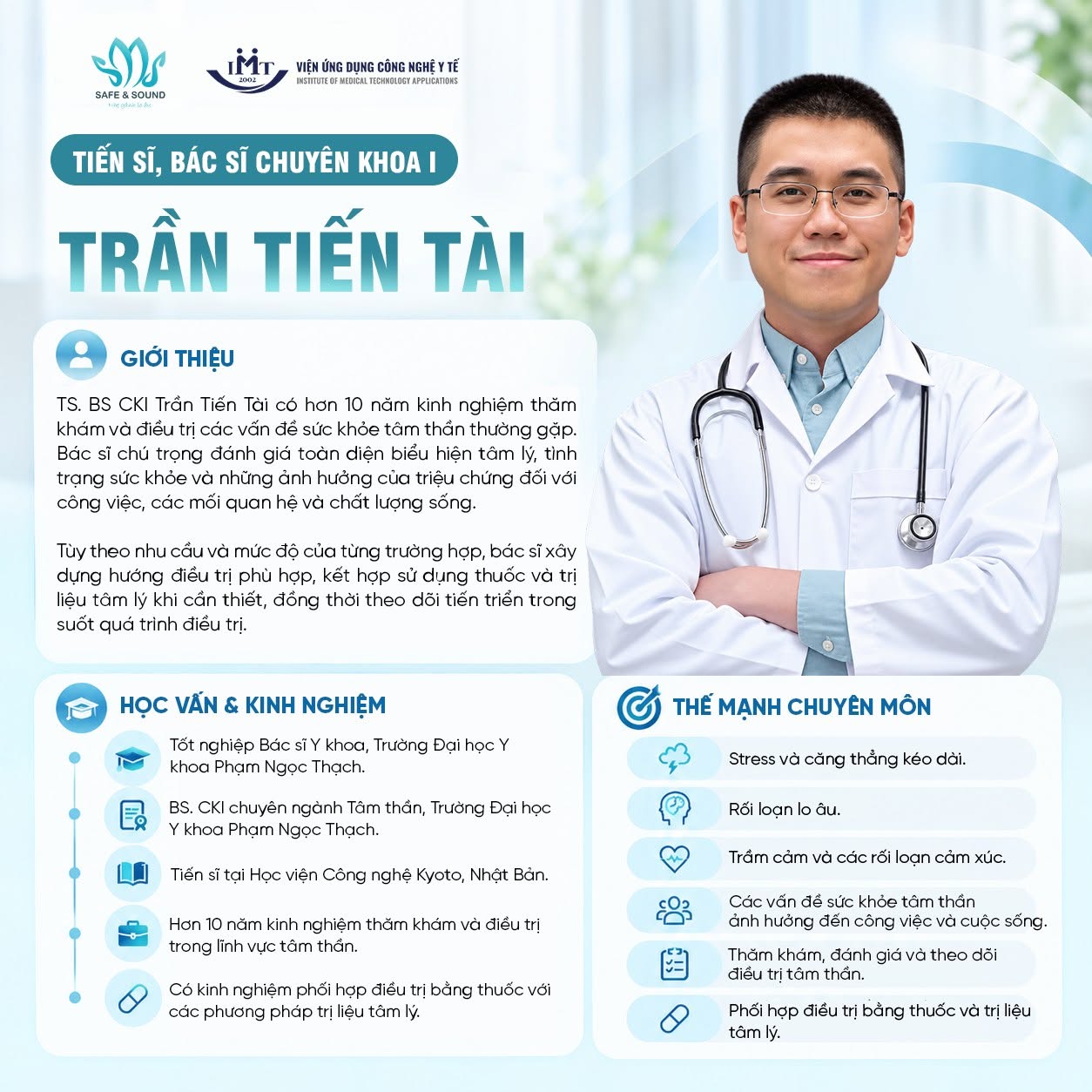
If anxieties about illness begin to affect work, relationships, or quality of life, talking to a mental health professional may be a necessary step. At SNS (Safe & Sound Clinic) , patients can be listened to, assessed, and supported to better understand the difficulties they are facing, thereby developing a more appropriate mental health care plan.